
Weight Management Education

GLP-1 Resources

Practical, evidence-informed tools and patient education for semaglutide, tirzepatide, and other GLP-1-based treatment.

A Comprehensive Guide to GLP-1 Medications for Sustainable Weight Loss

By Anthony J. Strickland, MD, FASAM. GLP-1 medications can be powerful tools, but sustainable treatment is about more than a number on the scale. This guide focuses on medication safety, nutrition, hydration, muscle preservation, movement, and long-term maintenance.

Before treatment

Review medical history, current medications, pregnancy plans, contraindications, and upcoming procedures with your clinician.

During treatment

Use the prescribed dose and product-specific instructions. Protect nutrition, hydration, and lean mass while your appetite changes.

Think long term

Weight management is chronic care. The maintenance plan matters as much as the active weight-loss phase.

Interactive Tools

GLP-1 Calculators

These tools are educational aids. They do not change your prescribed medication plan.

GLP-1 Dose Calculator

Convert a prescribed dose in milligrams to volume and U-100 syringe units for a vial medication.

Enter your concentration and prescribed dose.

Formula: Units = (dose mg ÷ concentration mg/mL) × 100

Safety: “Units” are a syringe measure of volume, not a standardized medication dose. Units only translate to milligrams when the exact vial concentration is known. Confirm your vial label and syringe type before injecting. If the amount looks different from your previous supply, call before injecting.

Daily Protein + Water Targets

Estimate hydration and review a protein range that should be individualized to body composition during GLP-1 treatment.

Enter your current weight.

Water: 0.35-0.50 oz/lb/day. Protein: often about 1.2-1.6 g/kg/day using an individualized reference such as adjusted/ideal body weight or lean mass; a practical absolute range for many adults is about 80-120 g/day.

If you have kidney disease, heart failure, or a prescribed fluid restriction, follow your clinician's individualized guidance rather than this calculator.

Daily Calorie Target

Estimate resting energy needs with the Mifflin-St Jeor equation, adjust for activity, and view an approximate 500 kcal/day deficit target.

Enter your measurements.
This is an estimate, not a prescription. GLP-1 therapy can suppress appetite enough that some patients unintentionally under-eat. If intake is persistently very low, or you develop fatigue, weakness, hair loss, or loss of strength, discuss this with your clinician.
Medication Safety

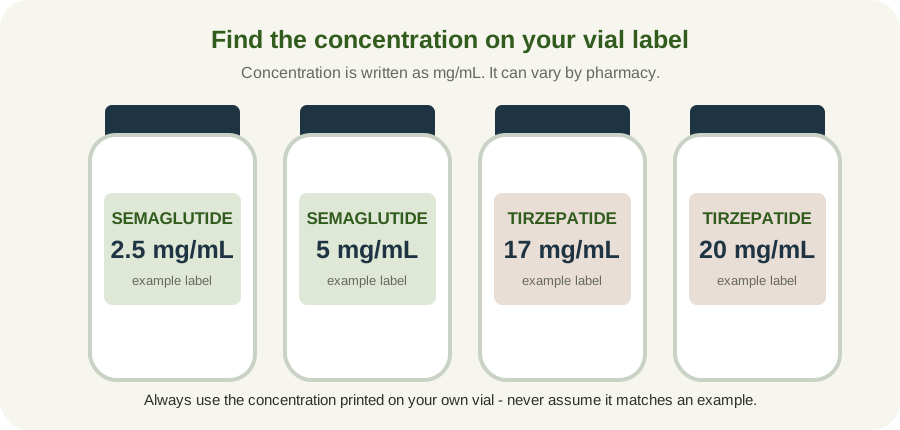
Know Your Vial Concentration

Compounded GLP-1 safety: Compounded products can come in different concentrations and are not interchangeable with FDA-approved pens. FDA has received reports of serious dosing errors, including patients drawing up 5 to 20 times the intended amount. Use compounded medication only when prescribed for an individual clinical need, verify the exact concentration and syringe, and call before injecting if anything is unclear.

The same prescribed dose can require a very different syringe volume depending on the concentration of the medication in your vial. Look for a concentration written as mg/mL.

For example, 0.5 mg from a 5 mg/mL vial is 0.10 mL, or 10 units on a U-100 syringe. The same 0.5 mg dose from a 2.5 mg/mL vial is 0.20 mL, or 20 units.

Never guess your concentration. If you cannot clearly identify the concentration or syringe type, contact the dispensing pharmacy or EvolveMD before injecting.
Example medication vials showing different semaglutide and tirzepatide concentrations in milligrams per milliliter
Weekly Dosing

Common Titration Schedules

These tables show labeled escalation schedules. Your clinician may hold a dose longer or individualize treatment based on tolerability and response. Do not increase your dose on your own.

Semaglutide

WeeksWeekly doseProduct
1-40.25 mgWegovy injection
5-80.5 mgWegovy injection
9-121.0 mgWegovy injection
13-161.7 mgWegovy injection
17+2.4 mgWegovy usual recommended maintenance
After >=4 weeks at 2.4 mgUp to 7.2 mgWegovy HD, when additional weight reduction is clinically indicated

Tirzepatide

WeeksWeekly dose
1-42.5 mg
5-85 mg
9-127.5 mg
13-1610 mg
17-2012.5 mg
21+15 mg maximum

Not every patient needs the maximum dose. Escalation is based on response and tolerability.

Oral Wegovy (semaglutide tablets)

DaysDaily dose
1-301.5 mg
31-604 mg
61-909 mg
91+25 mg maintenance

Oral Wegovy is taken once daily on an empty stomach in the morning with up to 4 oz of water; wait at least 30 minutes before food, beverages, or other oral medicines. Follow the current product instructions.

Patient Guide

Using GLP-1 Medications Safely and Sustainably

Important risks and precautions

  • Pregnancy and contraception: Weight-loss GLP-1/GIP medications are not recommended during pregnancy. Use reliable contraception and discuss pregnancy plans in advance. Semaglutide should be stopped at least 2 months before a planned pregnancy. With tirzepatide, switch to a non-oral contraceptive or add a barrier method for 4 weeks after starting treatment and for 4 weeks after each dose escalation.
  • Thyroid C-cell tumor warning: Semaglutide and tirzepatide should not be used with a personal or family history of medullary thyroid carcinoma or MEN2.
  • Surgery and procedures: Tell your surgeon, anesthesiologist, or endoscopist that you take a GLP-1 medication. Current guidance favors individualized risk assessment rather than automatically stopping treatment. Lower-risk patients can often continue therapy; higher-risk situations may call for measures such as a 24-hour liquid diet, gastric ultrasound, anesthesia precautions, or a temporary hold as directed by the procedural team.
  • Pancreatitis and gallbladder symptoms: Report severe persistent abdominal pain, especially if it radiates to the back. Right-upper-abdominal pain with fever, vomiting, or yellowing of the skin or eyes needs prompt evaluation.
  • Vision and mood changes: Report sudden or significant vision changes and concerning new depression, mood changes, or thoughts of self-harm.

Protect muscle while losing weight

Weight loss can include lean tissue as well as fat. Protein intake alone is not enough to optimally preserve muscle; pair adequate protein with structured resistance training. In obesity, applying 1.2-1.6 g/kg to actual body weight can overestimate needs, so protein should be individualized using adjusted/ideal body weight or lean mass. A practical absolute target for many adults is roughly 80-120 g/day, modified for clinical circumstances.

Hydration matters

Reduced food intake can also reduce fluid intake. Headache, fatigue, constipation, dizziness, and dark urine may be signs that hydration needs attention. Patients with kidney disease, heart failure, or fluid restrictions should follow individualized recommendations.

Common GI symptoms

Nausea, early fullness, reflux, constipation, diarrhea, and abdominal discomfort are common. Smaller meals, slower eating, adequate hydration, and avoiding foods that predictably worsen symptoms can help. Persistent vomiting, inability to hydrate, or severe abdominal pain requires medical attention.

Food and eating patterns

Build meals around protein, vegetables and fruit, fiber-rich carbohydrates as tolerated, and healthy fats. Very large meals, greasy foods, highly spicy foods, alcohol, carbonated beverages, or gas-producing foods can worsen symptoms for some people. The goal is not a universal forbidden-food list; it is learning what supports nutrition and what your body tolerates.

Movement, sleep, stress, and mindful eating

Regular aerobic movement supports cardiovascular health and mood, while resistance training helps preserve strength and muscle. Sleep and chronic stress affect appetite and recovery. Slow down during meals, notice hunger and fullness, and recognize when eating is being driven by stress, boredom, habit, or other non-hunger cues.

Track progress beyond the scale

Consider energy, mobility, waist circumference, clothing fit, strength, exercise capacity, blood pressure, laboratory markers, and sustainable habits alongside body weight. Look at trends over time rather than treating every daily fluctuation as success or failure.

Long-term maintenance

Obesity is often a chronic condition. Maintenance may include continued medication, dose adjustments, nutrition, activity, muscle preservation, sleep, and periodic self-monitoring. If medication is reduced or stopped, plan the transition with your clinician rather than stopping without a strategy.

More Education

Common GLP-1 Questions

Stopping a GLP-1: plan the transition

Open detailed guide

Stopping treatment is not simply the reverse of starting it. GLP-1-based medications change appetite, satiety, food preoccupation, and energy intake while you take them. When treatment is withdrawn, those effects can diminish and appetite may rise again. Weight regain after discontinuation is common in clinical trials, which reflects the chronic biology of obesity rather than a failure of willpower.

Before stopping, clarify why

  • Side effects may be addressed by a slower titration, dose reduction, nutrition changes, or a different medication.
  • Cost or coverage problems may have different solutions than stopping for pregnancy, a procedure, or a completed treatment goal.
  • If pregnancy is planned, use the medication-specific washout plan from your clinician; semaglutide should be stopped at least 2 months before planned conception.

Build the maintenance plan first

Expect hunger and food cues to change. Keep meal structure, adequate protein, resistance training, regular aerobic activity, sleep, and self-monitoring in place. Resistance exercise is especially important because preserving muscle helps support function and energy expenditure.

Exercise math matters

As body weight decreases, the calories required to move the body also decrease. Exercise is valuable for cardiovascular health, mood, strength, function, and weight maintenance, but it usually cannot fully offset a major return of appetite by itself. Think of activity as one part of a maintenance system rather than a calorie-for-calorie replacement for medication.

Monitor early

Agree on what change should trigger reassessment - for example, a sustained upward weight trend, increasing waist circumference, loss of control over hunger, or return of obesity-related conditions. Earlier adjustment is generally easier than waiting for substantial regain.

Weight-loss plateau: what may be happening

Open detailed guide

A plateau does not automatically mean the medication stopped working. Weight loss itself lowers energy requirements, and the rate of loss usually slows over time. Short plateaus can also reflect fluid shifts, constipation, menstrual changes, sodium intake, travel, or changes in activity.

First, define the plateau

Use trends rather than a few days on the scale. Review several weeks of weights under reasonably similar conditions and consider waist circumference, clothing fit, strength, and metabolic health as well.

Reassess the whole treatment plan

  • Confirm the medication is being taken consistently and the dose is appropriate and tolerated.
  • Look for calorie creep from drinks, alcohol, snacks, restaurant meals, or larger portions as appetite adapts.
  • Make sure intake has not become too low to support protein, micronutrients, and resistance training.
  • Review sleep, stress, medications that promote weight gain, constipation, and changes in daily movement.
  • Progress resistance training rather than relying only on additional cardio.

Do not automatically chase the maximum dose

Some patients benefit from further titration when clinically appropriate, while others do better by staying at a lower effective dose. Wegovy injection now has an adult obesity option up to 7.2 mg weekly for patients who have tolerated 2.4 mg for at least 4 weeks and need additional weight reduction. Dose decisions should be individualized rather than driven by the scale alone.

When the plateau may actually be maintenance

If health markers have improved and the current weight is sustainable, the next phase may be maintenance rather than continued pursuit of a lower number.

At goal: what maintenance looks like

Open detailed guide

Reaching a goal weight is a transition from active loss to long-term disease management. There is no requirement to stop medication simply because a target number has been reached. Obesity is commonly chronic and relapsing, and continued pharmacotherapy may be appropriate.

Define the new goal

Shift attention toward weight stability, waist circumference, strength, fitness, blood pressure, glucose and lipids when relevant, sleep, mobility, and quality of life.

Medication strategy

Your maintenance plan may involve continuing the effective dose, using a different maintenance dose, switching formulation, or eventually tapering/discontinuing with a monitoring plan. Do not improvise dose spacing or pen clicks unless specifically instructed for your prescribed product.

Protect what helped you succeed

  • Continue structured resistance training and regular aerobic activity.
  • Maintain adequate, individualized protein and hydration.
  • Keep the meal patterns that work with your hunger and schedule.
  • Continue periodic follow-up even when things are going well.

Expect a range, not one perfect number

Normal weight varies from day to day. A maintenance range is often more useful than trying to defend one exact scale number. Decide in advance what sustained change would prompt a check-in rather than reacting to every fluctuation.